
Solution
Customer Case Management
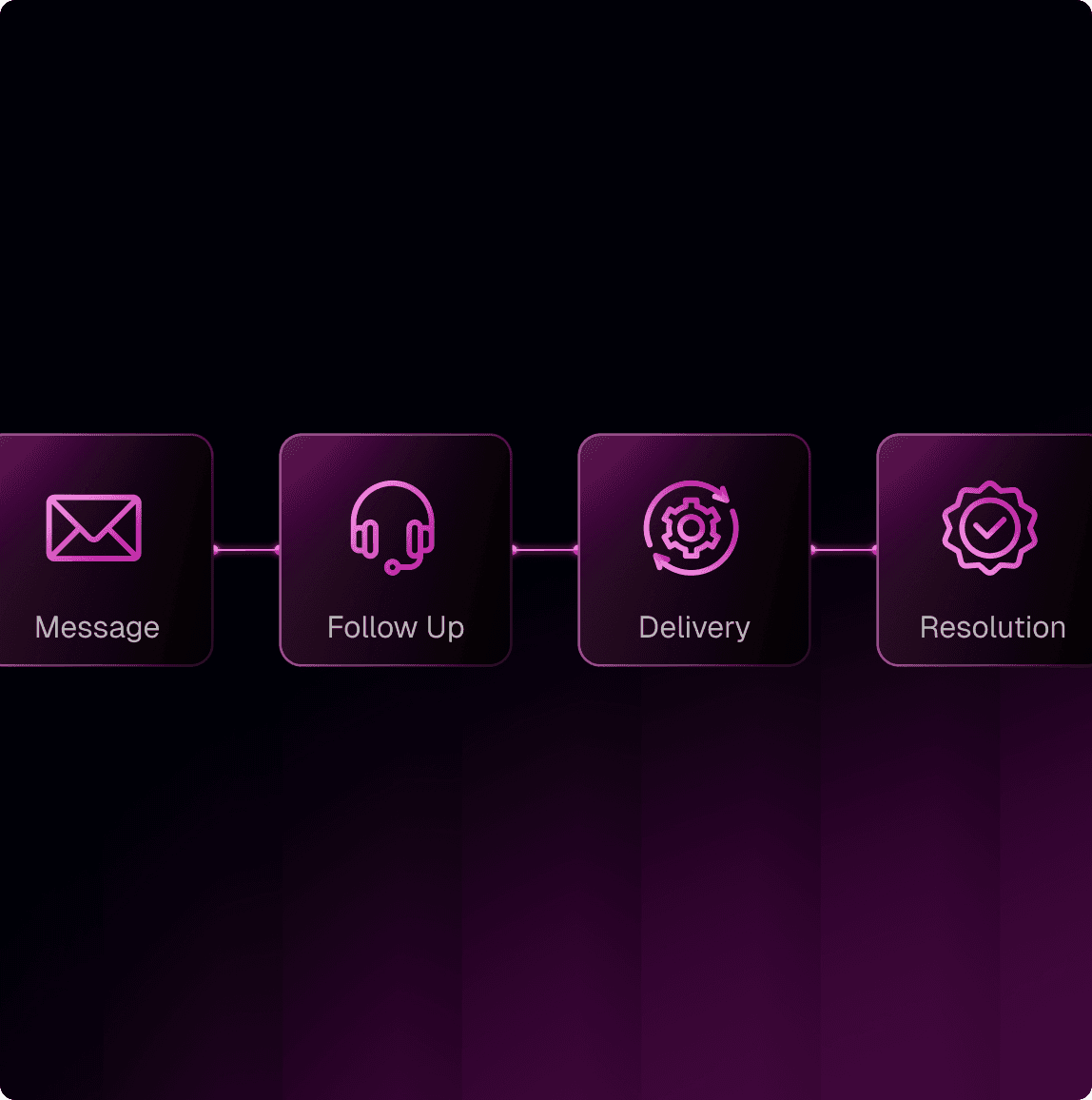
Customer complaints, defects, and disputes shouldn’t live in inboxes and spreadsheets. We build centralised case management systems on Microsoft Power Platform that track every issue from intake to resolution with assigned ownership, enforced SLAs, and a complete audit trail. Your team resolves faster. Your data shows you why issues happen in the first place.
Solution
Customer Case Management
Customer complaints, defects, and disputes shouldn’t live in inboxes and spreadsheets. We build centralised case management systems on Microsoft Power Platform that track every issue from intake to resolution with assigned ownership, enforced SLAs, and a complete audit trail. Your team resolves faster. Your data shows you why issues happen in the first place.
Why CASE MANAGEMENT
Why Workflow Orchestration
The Foundation of Customer Accountability
Unresolved issues don’t just frustrate clients. They erode trust, create compliance risk, and repeat when nobody tracks the root cause.
Structured Resolution
Every case gets a unique ID, an assigned owner, and a defined resolution path the moment it enters the system. Nothing sits untracked.
Structured Resolution
Every case gets a unique ID, an assigned owner, and a defined resolution path the moment it enters the system. Nothing sits untracked.

Enforced Deadlines
SLA timers trigger reminders and escalations automatically. High-priority cases that aren’t addressed in time surface to management before they become compliance issues.
Enforced Deadlines
SLA timers trigger reminders and escalations automatically. High-priority cases that aren’t addressed in time surface to management before they become compliance issues.

Root Cause Visibility
Tagged and categorised cases generate patterns over time. When the same supplier, product, or process drives repeated issues, you have the data to act on it.
Root Cause Visibility
Tagged and categorised cases generate patterns over time. When the same supplier, product, or process drives repeated issues, you have the data to act on it.
Capabilities
What This Looks Like in Practice
The building blocks behind every case management system we deliver.
Case Intake & Assignment
Cases are captured from email, portals, or internal submissions and assigned to the right team based on type, priority, and client segment.
Case Intake & Assignment
Cases are captured from email, portals, or internal submissions and assigned to the right team based on type, priority, and client segment.

SLA Management
Configurable deadlines per case type and priority level. Automatic reminders, escalation paths, and overdue alerts keep resolution on track.
SLA Management
Configurable deadlines per case type and priority level. Automatic reminders, escalation paths, and overdue alerts keep resolution on track.
Customer History
Full view of a client’s previous cases, contracts, and interactions — so your team resolves with complete context, not from scratch.
Customer History
Full view of a client’s previous cases, contracts, and interactions — so your team resolves with complete context, not from scratch.
Root Cause Tagging
Every case is categorised by type, source, and cause. Over time, this data reveals which areas generate the most issues and cost.
Root Cause Tagging
Every case is categorised by type, source, and cause. Over time, this data reveals which areas generate the most issues and cost.

Attachment Management
Photos, contracts, emails, and supporting documents attach directly to the case record. Everything related to the issue lives in one place.
Attachment Management
Photos, contracts, emails, and supporting documents attach directly to the case record. Everything related to the issue lives in one place.
Portal Integration
Connect case management to a customer-facing portal — letting clients log issues, upload evidence, and track resolution status without calling your team.
Portal Integration
Connect case management to a customer-facing portal — letting clients log issues, upload evidence, and track resolution status without calling your team.
our Process
We Understand Your Challenges
Centralise Issues. Resolve Systematically.
We map your case types and resolution paths, build a centralised case management system on Microsoft Power Platform, and give your team structured workflows with full audit trails from intake to close.

01
Discovery Call
We listen to your operational challenges, identify where the biggest friction sits, and assess whether there’s a fit. No pitch deck — just an honest conversation.
01
Discovery Call
We listen to your operational challenges, identify where the biggest friction sits, and assess whether there’s a fit. No pitch deck — just an honest conversation.
02
Process Review & Scoping
We map the specific workflows causing the most pain, define what automation looks like, and deliver a fixed-price scope with clear deliverables and timeline.
02
Process Review & Scoping
We map the specific workflows causing the most pain, define what automation looks like, and deliver a fixed-price scope with clear deliverables and timeline.
03
Proof of Concept
Before committing to a full engagement, you see a working prototype built on your actual process. You evaluate it, give feedback, and decide whether to proceed.
03
Proof of Concept
Before committing to a full engagement, you see a working prototype built on your actual process. You evaluate it, give feedback, and decide whether to proceed.
04
Build & Deliver
We build the full solution, train your team, and hand over documentation. Your team owns the result — no ongoing dependency on us to keep it running.
04
Build & Deliver
We build the full solution, train your team, and hand over documentation. Your team owns the result — no ongoing dependency on us to keep it running.
05
Training & Ongoing Maintenance
We provide training for your super users, and keep maintaining and extending your solution.
05
Training & Ongoing Maintenance
We provide training for your super users, and keep maintaining and extending your solution.
Technology
Built on Microsoft Power Platform
We leverage Microsoft's enterprise-grade platform for workflow automation. This means seamless integration with your existing Microsoft tools and a platform your team can maintain.
Native integration with Microsoft 365
Enterprise security and compliance
Low-code platform your team can evolve
Hundreds of pre-built connectors



FAQ
Frequently Asked Questions
Everything you need to know about working with us.
Still have questions? We're here to help.
How does a centralised case management system differ from using a shared mailbox or spreadsheet?
A shared mailbox captures communication but does not enforce a process. There is no automatic assignment, no SLA tracking, no escalation logic, and no structured data to analyse trends. A case management system assigns every issue a unique reference, routes it to the right team, tracks resolution against defined deadlines, and generates data on root causes and resolution performance. The difference is between collecting complaints and actively managing them.
Can our customers submit and track their own cases?
How do you handle the transition from our current process?
Can we configure SLAs and escalation rules to match our own policies?
How does a centralised case management system differ from using a shared mailbox or spreadsheet?
A shared mailbox captures communication but does not enforce a process. There is no automatic assignment, no SLA tracking, no escalation logic, and no structured data to analyse trends. A case management system assigns every issue a unique reference, routes it to the right team, tracks resolution against defined deadlines, and generates data on root causes and resolution performance. The difference is between collecting complaints and actively managing them.
Can our customers submit and track their own cases?
How do you handle the transition from our current process?
Can we configure SLAs and escalation rules to match our own policies?
How does a centralised case management system differ from using a shared mailbox or spreadsheet?
A shared mailbox captures communication but does not enforce a process. There is no automatic assignment, no SLA tracking, no escalation logic, and no structured data to analyse trends. A case management system assigns every issue a unique reference, routes it to the right team, tracks resolution against defined deadlines, and generates data on root causes and resolution performance. The difference is between collecting complaints and actively managing them.
Can our customers submit and track their own cases?
How do you handle the transition from our current process?
Can we configure SLAs and escalation rules to match our own policies?

Get Started
Ready to make AI work for your enterprise?
A 30-minute conversation is usually enough to know whether we are a fit. Or start with the maturity assessment, it tells you where you stand before starting.
Get Started
Ready to make AI work for your enterprise?
A 30-minute conversation is usually enough to know whether we are a fit. Or start with the maturity assessment, it tells you where you stand before starting.
Get Started
Ready to make AI work for your enterprise?
A 30-minute conversation is usually enough to know whether we are a fit. Or start with the maturity assessment, it tells you where you stand before starting.